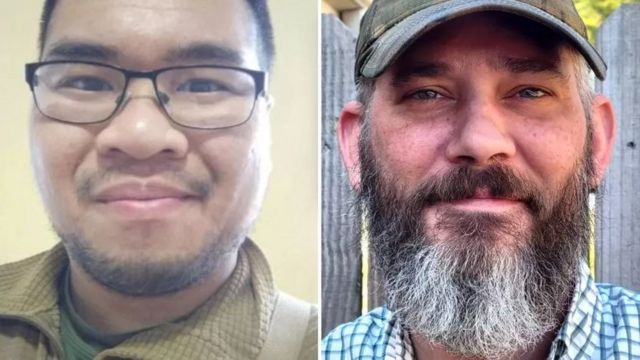
Nga thả ông Andy Huynh, người lính sang Ukraine chiến đấu

Andy Tai Ngoc Huynh (trái) và Alexander Drueke

NGUỒN HÌNH ẢNH,
CBS/REUTERS
Andy Tai Ngoc Huynh (trái) và Alexander Drueke

Hai người Mỹ bị lực lượng do Nga hậu thuẫn bắt giữ sau khi tình nguyện chiến đấu ở Ukraine đã được thả.

Alexander Drueke và Andy Huynh, cả hai là cựu quân nhân từ Alabama, mất tích sau một cuộc chiến ở khu vực Kharkiv của Ukraine vào tháng Sáu.

"Chúng tôi rất vui mừng được thông báo rằng Alex và Andy đã được tự do", các gia đình cho biết.

"Họ đang được đại sứ quán Hoa Kỳ ở Saudi Arabia tạm giữ an toàn và sau khi kiểm tra y tế và thẩm vấn, họ sẽ trở về Hoa Kỳ."

Drueke và Huynh được cho là những công dân Hoa Kỳ đầu tiên bị lực lượng của Nga bắt giữ ở miền đông Ukraine khi họ được thông báo mất tích vào giữa tháng 6.

Sau khi bị quân Nga bắt, cả hai bị giam giữ tại Cộng hòa Nhân dân Donetsk (DPR), chế độ ly khai do Nga hậu thuẫn ở miền đông Ukraine.

Bộ Ngoại giao Saudi Arabia cho biết hôm thứ Tư rằng "các nỗ lực hòa giải" thay mặt cho Thái tử Mohammed bin Salman đã dẫn đến việc thả 10 tù nhân chiến tranh - trong số đó có công dân Hoa Kỳ - như một phần của cuộc trao đổi giữa Nga và Ukraine.

Các công dân Anh, Thụy Điển, Croatia và Morocco cũng được trả tự do.

Thủ tướng Anh Liz Truss cho biết bà "vô cùng hoan nghênh khi 5 công dân Anh bị lực lượng do Nga hậu thuẫn ở miền đông Ukraine bắt giữ, sắp được trở về an toàn, chấm dứt những tháng bất ổn và đau khổ cho họ và gia đình của họ."

Drueke, một cựu binh và Huynh, một cựu Thủy quân lục chiến, cả hai đều rời Alabama đến Ukraine vào tháng 4 và gặp nhau ở đó.

Sau khi gia đình của họ thông báo rằng đã mất liên lạc với họ vào đầu tháng 6, các bức ảnh bắt đầu xuất hiện trên các phương tiện truyền thông xã hội của Ukraine và Nga cho thấy họ bị giam cầm.

Điện Kremlin cho rằng người Mỹ là lính đánh thuê và đã "phạm tội".

Tổng thống Ukraine Volodymyr Zelensky trước đó đã gọi cả hai người là "anh hùng" và nói rằng ông sẽ đấu tranh để họ được thả. "Chúng tôi sẽ đưa họ trở lại, và tất nhiên họ sẽ trở về với gia đình", ông nói vào tháng Sáu.

https://www.bbc.com/vietnamese/articles/cv21k01n1klo

Comments

Popular posts from this blog

U.S. vows second warship for Philippines

Chiến hạm BRP Gregorio del Pilar cuả HQ Philippines By Jim Gomez - The Associated Press MANILA, Philippines — The United States will provide a second warship to the ill-equipped Philippine military as it confronts China in increasingly tense territorial disputes in the South China Sea, a Philippine official said Thursday. U.S. Secretary of State Hillary Rodham Clinton assured Defense Secretary Voltaire Gazmin during talks in Manila on Wednesday that Washington would give its longtime ally a second Coast Guard cutter virtually for free some time next year. The first second-hand cutter from the U.S. Coast Guard sailed into Manila in August and became the most modern vessel in the dilapidated Philippine fleet. Clinton assured the Philippine military of intensified U.S. assistance Wednesday when the allies marked the 60th anniversary of the signing of their Mutual Defense Treaty aboard a U.S. Navy destroyer in Manila.

Chinese Support for North Vietnam during the Vietnam War: The Decisive Edge

by Bob Seals   “Best turn it into a bigger war…I’m afraid you really ought to send more troops to the South…Don’t be afraid of U.S. intervention, at most it’s no worse than having another Korean War. The Chinese army is prepared, and if America takes the risk of attacking North Vietnam, the Chinese army will march in at once. Our troops want a war now.” [1] -- Mao speaking to the North Vietnamese in 1964

Questions & Answers_Bill Laurie

Will be speaking to college VN class this week.  They've already submitted 17 questions, answers to which I've since emailed back to their instructor, a USAF VN veteran with history Ph.D.  The presentation will touch on some of these topics and issues but will include much more than contained in these answers.  Here are the questions and answers..... 1. What do you feel the television media effects were on not only the soldiers, but the Vietnamese people as well? It's arguable that television/media coverage had little direct effect on troops, and less so on Viet Namese people, because they didn't see much of it.  It had a huge cumulative indirect effect on both because "news"(?), shallow and biased as it was, did effect people in U.S., both amongst general public and elected officials and decision makers.  The effect was detrimental.